

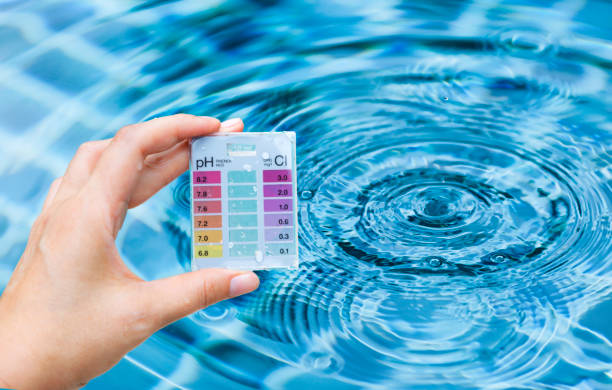
In the dense urban landscape of Hoboken, we rely on a complex network of pipes to deliver safe, potable water to our doorsteps. For those living in multi-family units ranging from the historic brick row houses of the 2nd Ward to the sprawling modern complexes along the Hudson there is an invisible safety net keeping our water sterile: Chlorine Residual.
As we move through 2026, local-quality assessments are increasingly highlighting a specific vulnerability in larger buildings. While the water entering the building may be perfectly treated, the level of protective chlorine often drops to dangerous lows before it ever reaches an individual apartment’s tap. When chlorine residuals disappear, it raises a major red flag for microbial growth, biofilm accumulation, and the overall safety of the building’s plumbing ecosystem.
Understanding the “Disinfectant Shield”
Chlorine is added to the water supply for one primary reason: to kill pathogens. According to the Environmental Protection Agency (EPA), a “residual” is the small amount of chlorine that remains in the water as it travels through the distribution system. This residual acts as a continuous shield, neutralizing bacteria and viruses that might enter the pipes through small leaks, water main breaks, or cross-connections.
In a single-family home, water moves relatively quickly from the street to the tap. However, in Hoboken’s multi-family units, the water must navigate a labyrinth of basement pumps, massive storage tanks, and hundreds of feet of vertical risers. This extended journey provides ample opportunity for the chlorine to be “spent” or dissipated, leaving the residents at the end of the line often those on the highest floors with little to no protection.
Why Chlorine Disappears in Multi-Family Buildings
There are several factors unique to Hoboken’s multi-unit locations that cause chlorine levels to plummet:
1. Water Age and Stagnation The longer water sits in a pipe, the more the chlorine naturally dissipates into the air or reacts with the pipe walls. In large buildings with low occupancy or in units that sit vacant between leases, the “water age” increases significantly. Stagnant water is the primary enemy of chlorine residual.
2. Organic Loading and Biofilms Older buildings in Hoboken often have a layer of “biofilm” a thin, slimy film of bacteria living on the inside of the pipes. Chlorine is a sacrificial chemical; it “uses itself up” trying to kill these biofilms. If a building’s internal plumbing is heavily scaled or old, the chlorine entering from the city main is exhausted fighting the pipes themselves, leaving none left for the water you actually drink.
3. Roof Tanks and Storage Reservoirs Many of Hoboken’s larger or older multi-family units utilize roof tanks to maintain water pressure. These tanks are often exposed to temperature fluctuations. As water warms up in the summer heat of 2026, chlorine evaporates at an accelerated rate. If these tanks are not part of a strict maintenance schedule, they can become “dead zones” where disinfectant levels drop to zero.
The Red Flag: What Happens When the Shield Fails?
When services identify a chlorine residual of less than 0.2 mg/L at a kitchen sink, it signals that the water is no longer protected. This raises several immediate flags for building managers and residents:
- Legionella Risk: Legionella bacteria thrive in the warm, stagnant, and non-chlorinated environments of large building plumbing systems. Without a chlorine residual, these pathogens can colonize showerheads and cooling towers, posing a serious respiratory risk.
- Nitrification: In systems that use chloramines (chlorine mixed with ammonia), a drop in disinfectant can lead to nitrification. This process can cause a spike in nitrites, which can affect the blood’s ability to carry oxygen, particularly in infants.
- Taste and Odor Issues: Ironically, water with too little active chlorine often smells worse. This is because “spent” chlorine (chloramines) produces a strong bleach-like odor, whereas active, “free” chlorine is relatively odorless at the correct levels.
The 2026 Infrastructure Connection
Hoboken is currently undergoing a massive transformation of its water grid. Between the Rebuild By Design project and the city-wide water main replacement program, the way water flows through our streets is changing.
These changes can lead to temporary “pressure drops” or “flow reversals” in the city mains. For a multi-family building, these fluctuations can stir up sediment in the basement service line. This sudden influx of organic sediment acts as a “chlorine sponge,” soaking up the available disinfectant and leaving individual units vulnerable. As we frequently mention on our blog, what happens at the street level always has a ripple effect on the individual unit’s safety.
How Residents Can Identify Low Chlorine
While a laboratory test is the only definitive way to measure residuals, there are subtle signs that the chlorine in your Hoboken apartment is too low:
- Slime in the Aerator: If you unscrew the screen at the end of your faucet and find a pink or clear slimy residue, bacteria are growing because there isn’t enough chlorine to stop them.
- Cloudy Water: If the water is hazy and doesn’t clear up after 60 seconds of sitting, it may contain suspended organic matter that the chlorine failed to oxidize.
- Musty Odors: If your water smells “earthy” or like “dirt” rather than slightly like a pool, it’s a sign that biological activity is taking place in your pipes.
Solutions for Multi-Family Units
Addressing low chlorine residuals in a large building requires a two-pronged approach:
For Building Management: Management should implement a comprehensive Water Management Plan (WMP). This includes regular flushing of stagnant lines, cleaning of roof tanks, and potentially installing “secondary disinfection” systems that boost chlorine levels within the building’s own plumbing loop.
For Individual Residents: If you live in a building where you suspect low residuals, the first step is verification. At Olympian Water Testing of Hoboken NJ, we provide precise on-site testing for Free and Total Chlorine. If a deficiency is found, the most effective solution is a high-quality Point-of-Use (POU) filtration system. However, residents must be careful; once a filter removes chlorine for taste, the water is no longer protected and must be consumed immediately to prevent bacterial regrowth.
Conclusion: Vigilance in the Mile Square
In a city as densely populated as Hoboken, we are all part of a shared biological environment. In multi-family units, the responsibility for water safety is shared between the city, the building owner, and the resident. Low chlorine residuals are a “silent” red flag they don’t always change the appearance of the water, but they fundamentally change its safety profile.
By staying informed and insisting on regular testing, residents can ensure that the “disinfectant shield” remains intact from the street all the way to their glass.