

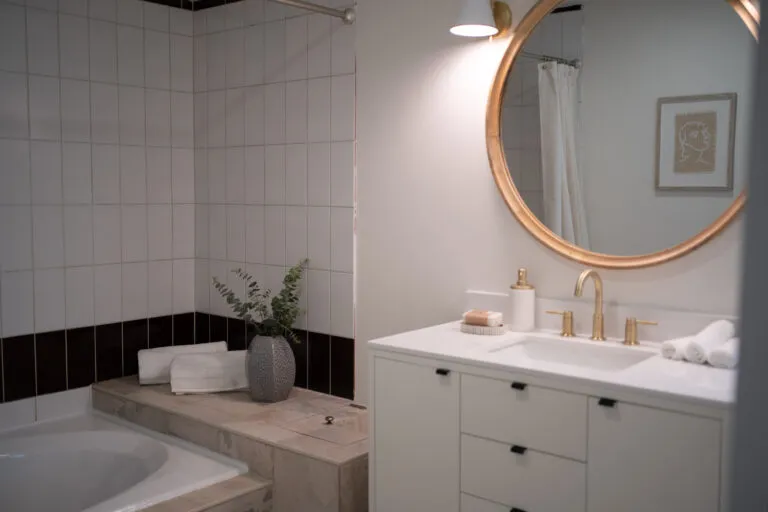
In the Hoboken real estate market, few phrases are as alluring as “recently updated bathroom.” For a renter or buyer looking at a classic brownstone near Stevens Institute or a mid-century walk-up in the South End, those words conjure images of pristine subway tile, matte black rainfall showerheads, and gleaming marble vanities. It suggests a home that has been brought into the modern era one where the worries of the past have been scrubbed away.
However, as we move through 2026, many residents are discovering that “updated” is often a cosmetic term, not a structural one. While the surfaces look like they belong in a luxury magazine, the water flowing through the new faucets may still be traveling through a century of decay. At Olympian Water Testing of Hoboken NJ, we frequently find that a bathroom renovation can actually create new risks for tap water safety. Understanding what lies behind the tile is the only way to ensure your “modern” home is actually healthy.
The Cosmetic Overhaul vs. The Pipe Replacement
The most common reality in Hoboken’s historic locations is the “flip.” In these scenarios, a landlord or developer focuses on the visual elements that drive rent or sale prices. They replace the vanity, the mirror, and the faucet, but they rarely open the walls to replace the vertical risers or the horizontal branch lines.
When you turn on your beautiful new faucet, the water is still coming from the same 80-year-old galvanized steel or lead-soldered copper pipes. In fact, the act of installing a new vanity often involves “jostling” these old pipes, which can break loose decades of accumulated rust and lead scale. For a resident, this means your “new” bathroom could be delivering a higher concentration of heavy metals than the “old” one did.
The New Fixture Loophole: Lead in “Lead-Free” Brass
Even if the renovation included high-end fixtures, there is a regulatory gap that many residents overlook. Until the Reduction of Lead in Drinking Water Act was fully implemented in 2014, “lead-free” plumbing fixtures could legally contain up to 8% lead.
If your “updated” bathroom was actually renovated in 2010 or 2012, those designer brass faucets are likely leaching lead into your water. It wasn’t until the 2014 shift that the standard was lowered to 0.25%. Because bathroom water is often used for brushing teeth or taking late-night sips, this localized lead source can lead to chronic, low-level exposure that goes unnoticed without professional services.
Galvanic Corrosion: The Result of Mixing Old and New
A “partial” update is often worse than no update at all. If a contractor replaces a section of old pipe with new copper or PEX but leaves the rest of the building’s galvanized steel intact, they have created a “galvanic cell.”
When two different types of metal are joined together, a tiny electrical current flows between them. This current accelerates the corrosion of the older metal. In many Hoboken apartments, this results in:
- Pin-hole leaks: Hidden behind that brand-new tile work.
- Rust Spikes: Discoloring your morning water.
- Heavy Metal Leaching: Specifically iron, zinc, and lead being pulled into the water stream at the point where the metals meet.
This is a recurring theme on our blog, where we highlight that water safety is a system-wide issue, not a faucet-specific one.
The Hot Water Hazard in Bathrooms
In an “updated” bathroom, the hot water line is the most likely to fail a safety screening. Most residents use the bathroom sink for warm water while washing their face or shaving. Because hot water is a more aggressive solvent, it “vacuums” contaminants out of the building’s old infrastructure much faster than cold water.
If the renovation didn’t include a new, dedicated water heater or a thorough cleaning of the building’s boiler-to-bathroom lines, you are likely receiving a “slug” of sediment and metals every time you turn the handle to the left. As part of our local-quality assessments, we always recommend testing the bathroom hot tap separately from the kitchen cold tap to identify these disparities.
Sediment Traps: The Aerator Problem
Modern faucets are designed with “low-flow” aerators to conserve water. While great for the environment, these tiny screens act as a filter for all the debris coming from your building’s old pipes.
In a newly updated bathroom, these aerators quickly become “sediment traps.” Small flakes of lead solder, rust, and mineral scale get caught in the screen. Every time you run the water, it passes over this concentrated collection of debris, essentially “steeping” your water in contaminants. If you haven’t unscrewed and cleaned your new bathroom faucet aerator in the last month, you may be drinking a higher concentration of metals than you realize.
Why Physical Appearance is a Poor Indicator of Safety
You cannot see, taste, or smell lead. You cannot always smell the bacteria that might be growing in a stagnant “dead-leg” pipe that was capped off during a bathroom renovation but left in the wall.
A bathroom that looks like a spa can still be a source of environmental risk. This is particularly true in 2026, as Hoboken undergoes massive maintenance of its street-level water mains. The physical vibrations from construction on Washington Street or the North End can send “shocks” through your building’s pipes, causing old contaminants to end up in your new, expensive sink.
Steps for Residents in “Updated” Homes
If you have recently moved into a renovated Hoboken apartment, don’t take the water’s safety for granted:
- Request the Renovation Scope: Ask your landlord if the pipes behind the walls were replaced or if it was just the “trim” (the faucets and showerheads).
- Flush After Disuse: If you haven’t used the bathroom for several hours, run the cold water for 60 seconds to clear out any water that has been sitting in contact with old solder.
- Check the Aerators: If you notice a drop in water pressure in your new faucet, it’s a sign that sediment from old pipes is clogging the screen.
- Get a Comparative Test: The only way to know if your “update” included the plumbing is to test the water.
Conclusion: True Modernity is Verified
An updated bathroom should provide peace of mind, not just a nice aesthetic for your morning routine. In a city as historic as Hoboken, we must look deeper than the surface. Modern fixtures are a wonderful addition to a home, but they are only as safe as the pipes that feed them.
By verifying your water quality with a professional lab, you can ensure that your “updated” home is truly a sanctuary. Don’t let the beauty of new tile mask the reality of old plumbing.