

In the world of urban water quality, there is a common misconception that if the water entering a building is clean, the water coming out of the tap must be clean too. However, recent screenings in high-density locations across Hoboken are proving that the truth is far more complex.
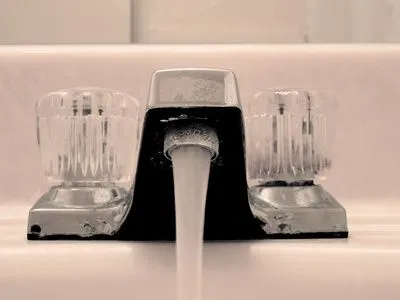
A growing number of residents are discovering that “testing both sides of the faucet” analyzing both the cold and hot water lines independently is the only way to uncover hidden plumbing failures. In several recent cases, what appeared to be a “clean” cold water report masked a serious contamination issue lurking on the hot water side, proving that your home’s internal plumbing can act as a secondary source of pollution.
The Mystery of the One-Sided Failure
The phenomenon usually begins with a resident noticing a “strange taste” or a slight discoloration that only appears when they run a warm bath or use the hot tap to rinse dishes. When standard services are employed to test only the cold water, the results often come back well within the “legal” limits set by the EPA.
However, the “hot side” of the faucet tells a different story. Because hot water is a more aggressive solvent, it reacts differently with the aging pipes and storage tanks found in Hoboken’s historic brownstones and mid-century co-ops. When we test both sides, we often find a “clean” cold sample paired with a hot sample that is significantly elevated for heavy metals or bacteria.
The Lead and Copper Disparity
One of the most frequent “surprises” revealed by dual-faucet testing is a spike in lead or copper that only exists in the hot water line.
- Why it Happens: Hot water accelerates the leaching process. If your building contains legacy lead solder or brass fixtures, the heat from the water heater “pulls” these metals out of the plumbing and into the water stream.
- The Result: A family might be drinking cold water that is perfectly safe but using hot water for cooking or tea that contains dangerous levels of lead.
As we’ve noted on our blog, this disparity is why we strongly advise against ever using the hot water tap for consumption, especially in buildings constructed before 1986.
The Bacterial Breeding Ground: The Hot Water Tank
While heavy metals are a chemical risk, testing both sides of the faucet also reveals biological threats that cold-only testing misses.
In several recent Hoboken building assessments, cold water tests showed a healthy chlorine residual meaning the city’s disinfectant was still active. However, the hot water samples showed zero chlorine and a presence of Total Coliform or Legionella bacteria.
This occurs because heat causes chlorine to dissipate rapidly. Once the disinfectant is gone, the warm environment of a water heater or a building-wide boiler becomes a breeding ground for biofilms. Residents who only test the cold water remain blissfully unaware that they are aerosolizing bacteria every time they take a hot shower. This is a critical factor in local-quality management for large residential complexes.
Sediment “Slugging” in Older Pipes
Dual-side testing also reveals issues with “sediment slugging.” Over decades, minerals and rust settle at the bottom of water heaters and in the horizontal runs of hot water piping.
Because hot water is used less frequently and in lower volumes than cold water (which feeds toilets and washing machines), this sediment can build up undisturbed. When a resident finally opens the hot tap fully, they get a “slug” of concentrated minerals. Testing both sides allows Olympian Water Testing of Hoboken NJ to pinpoint whether a sediment problem is coming from the city main (affecting both sides) or strictly from the building’s hot water storage (affecting only the hot side).
Case Study: The West Hoboken Brownstone
In early 2026, a tenant in a West Hoboken walk-up reported a persistent metallic smell. A standard cold-water test performed by the landlord came back negative for all major contaminants.
Dissatisfied, the tenant requested a “comparative analysis.” The results were startling:
- Cold Water: Lead levels at 2.1 ppb (well below the 15 ppb action level).
- Hot Water: Lead levels at 24.8 ppb (significantly exceeding safety standards).
This revealed that the building’s water heater was failing and that the interior lining of the tank had corroded, exposing the water to lead-containing components. Without testing “both sides,” the source of the problem would have remained hidden, and the tenant would have continued to be exposed.
How to Conduct a Proper Comparative Test
If you suspect your building’s plumbing is affecting your water, a professional sampling protocol is required:
- Stagnation: The water must sit in the pipes for at least 6 hours to allow for maximum leaching.
- Separate Vials: A “first-draw” sample is taken from the cold tap, followed immediately by a “first-draw” sample from the hot tap.
- Temperature Logs: The technician should record the temperature of the hot water, as temperatures below $120^{\circ}\text{F}$ significantly increase the risk of bacterial growth.
- Professional Maintenance: If a disparity is found, it often signals the need for immediate maintenance on the water heater or the building’s boiler system.
Conclusion: Don’t Settle for Half the Story
Your faucet provides two distinct streams of water, each with its own chemical and biological profile. In a city as old and complex as Hoboken, testing only one side of the tap is like getting half of a medical check-up.
By insisting on a comparative analysis, you can identify exactly where a problem originates whether it’s the city’s responsibility, the building’s infrastructure, or your own unit’s appliances. Knowledge is the only way to ensure that “clean” water stays clean all the way to your glass.