

In the Mile Square City, parents are known for being exceptionally proactive. From securing spots in the best preschools to navigating the stroller-filled sidewalks of Washington Street, Hoboken families prioritize health and safety above all else. However, in 2026, a new recommendation is frequently surfacing during well-child visits: independent water testing.
Local pediatricians are increasingly advising families especially those living in historic brownstones or older apartment complexes to go beyond the city’s annual water report. While Hoboken’s municipal water meets federal standards at the source, the journey that water takes through a building’s internal plumbing can change its chemical makeup. For a developing child, these “last-mile” changes aren’t just a matter of taste; they are a matter of long-term health.
The Pediatric Perspective: Why Children are More Vulnerable
Children are not just small adults. Their physiology makes them uniquely susceptible to contaminants that might not significantly affect a fully grown person. Pediatricians emphasize three main reasons why water quality is a pediatric priority:
- Higher Intake per Body Weight: Ounce for ounce, infants and children drink more water, eat more food, and breathe more air than adults. This means they receive a higher “dose” of any contaminant present in the tap.
- Developing Systems: A child’s brain, nervous system, and organs are in a state of rapid growth. Contaminants like lead can interfere with the delicate process of neural mapping, leading to permanent cognitive effects.
- Absorption Rates: Children’s bodies are more efficient at absorbing certain heavy metals. For instance, an adult might absorb about 10% of the lead they ingest, while a child’s body can absorb up to 50%.
Because of these factors, the American Academy of Pediatrics (AAP) maintains that there is no safe level of lead exposure for children.
The Lead Challenge in a Historic City
Hoboken’s charm lies in its history, but that history includes a legacy of lead. While the city is currently working through a massive water service line replacement project, many internal plumbing systems still harbor lead solder or older brass fixtures.
When a pediatrician sees a child with elevated blood lead levels, the first question is often about the home’s water. Even in “renovated” buildings, the pipes behind the walls or the valves under the sink may pre-date modern safety codes. Pediatricians recommend independent testing because it provides a unit-specific “map” of the water quality something a general city report cannot provide.
PFAS and Emerging Contaminants
As we move through 2026, “forever chemicals” or PFAS (per- and polyfluoroalkyl substances) have become a focal point of pediatric concern. These synthetic chemicals, used in everything from non-stick pans to firefighting foam, have made their way into groundwater across New Jersey.
Recent studies linked by the EPA suggest that PFAS exposure in children can lead to decreased vaccine response and altered immune function. Hoboken pediatricians are aware that New Jersey has implemented some of the nation’s strictest standards for PFAS. They recommend independent services to ensure that a family’s specific locations are not experiencing “spikes” that exceed these new health-based limits.
The “Hot Water” Trap and Formula Safety
A common point of discussion in Hoboken pediatric offices is formula preparation. Many parents, in a hurry to prepare a bottle, might use warm water directly from the tap.
As we often highlight on our blog, heat acts as a catalyst for leaching metals. Hot water dissolves lead and copper from pipes and fixtures much faster than cold water. Furthermore, water heaters can accumulate sediment and bacteria over time if they lack regular maintenance.
Pediatricians consistently echo our advice: Always use cold, filtered water for formula and heat it on the stove or in a dedicated bottle warmer. Testing both the hot and cold sides of the faucet can reveal if a building’s boiler system is contributing to a child’s heavy metal exposure.
What Independent Testing Reveals
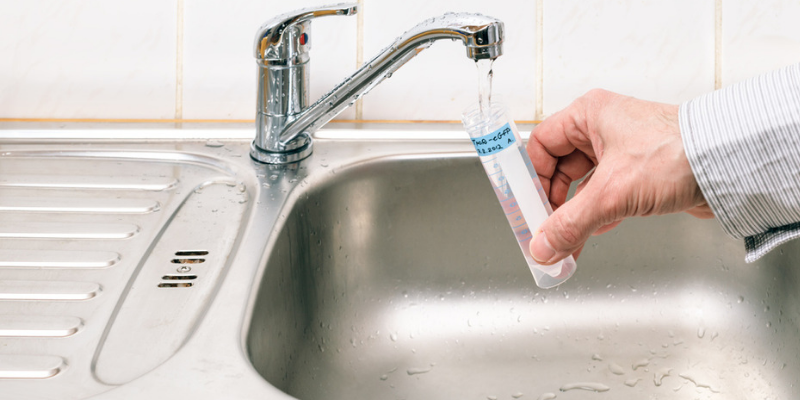
When a family opts for a professional analysis through Olympian Water Testing of Hoboken NJ, they receive data that is far more granular than municipal testing. We look for:
- First-Draw Lead: This captures the lead that has leached into the water while it sat in the pipes overnight the water a child is most likely to drink first thing in the morning.
- Copper Levels: Excessive copper can cause gastrointestinal issues in children, often mistaken for “stomach bugs” or food sensitivities.
- Bacteria: For families in buildings with roof tanks, we check for microbial growth that can occur if the building’s local-quality standards aren’t strictly upheld.
Moving Beyond the “Legal” Limit
The biggest reason pediatricians push for independent testing is that “Legal” does not always mean “Safe” for a child. The EPA’s “Action Level” for lead is 15 parts per billion (ppb). However, pediatricians know that cognitive impacts can occur at much lower levels.
By performing an independent test, parents can see if their water contains 5 ppb or 10 ppb. While these levels “pass” a federal inspection, they may prompt a pediatrician to recommend a high-quality Point-of-Use (POU) filtration system to bring that number as close to zero as possible.
Conclusion: A Simple Step for Lifelong Health
In 2026, water testing has become a standard part of the “baby-proofing” checklist in Hoboken. By following the advice of local pediatricians and verifying the safety of the tap, parents can eliminate one of the most significant environmental risks to their child’s development.
The peace of mind that comes with a certified lab report is invaluable. It allows you to focus on the joy of raising a child in this vibrant city, knowing that the foundation of their health the water they drink every day is secure.